Kadiatou Conte-Forte's Story
There are people who do not simply

Amara Okafor
Apr 18, 2026 · 5 min read
There are people who do not simply
participate
in culture, they become its living archive, its movement, its breath, its memory made visible. Mama Kadiatou Conte-Forte was one of those rare figures.
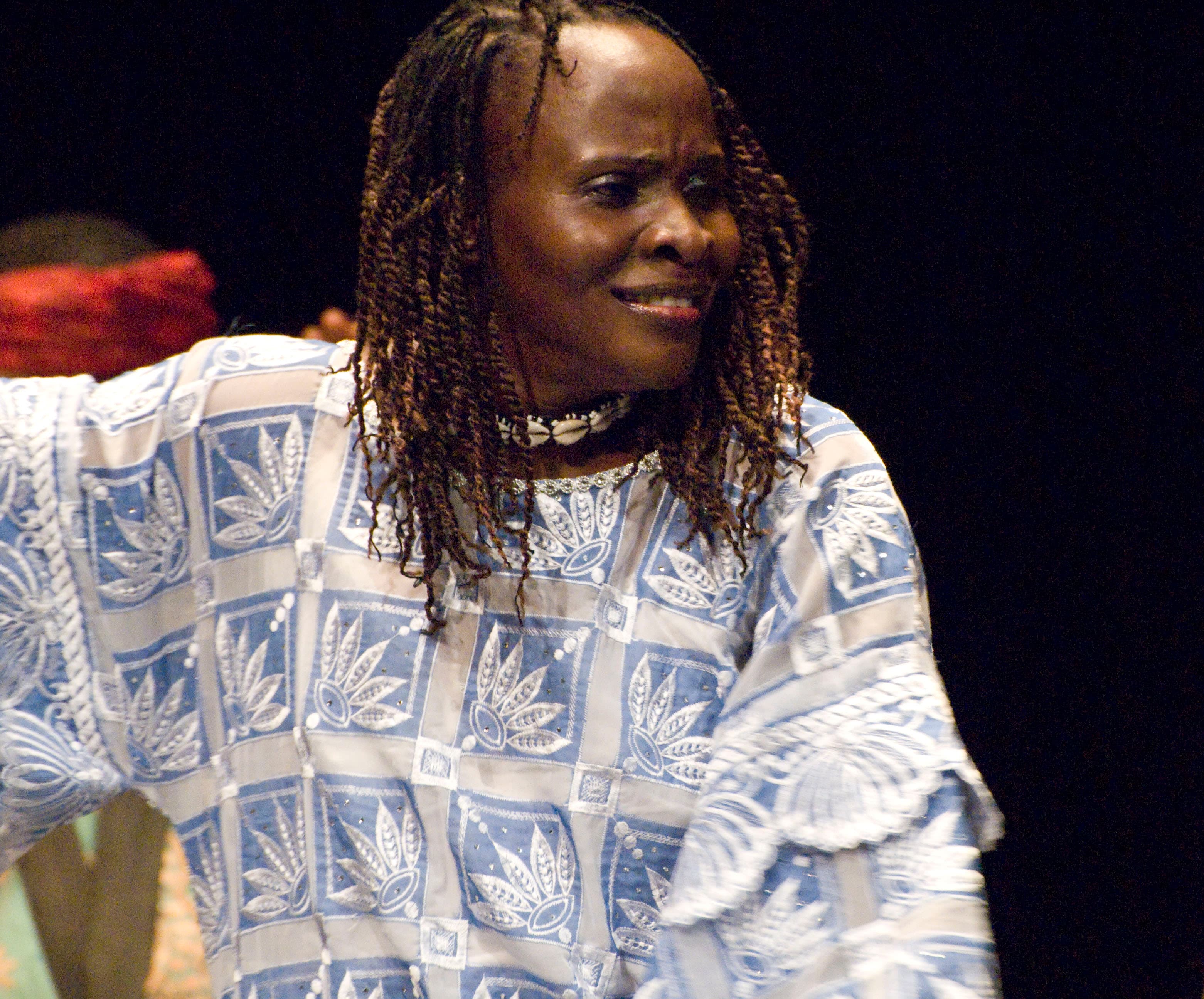
Born in Conakry, Guinea, in 1955, she emerged from humble beginnings into the disciplined, electrifying world of West African classical dance. Her path carried her through the rigorous national stages of Guinea’s most revered companies, including Ballet Djoliba and Les Ballets Africains, where she refined not only technique but a presence that could hold an entire audience in reverent silence. For fifteen years, she toured globally, carrying the spirit of West Africa into royal halls, state stages, and packed international theaters, each performance a living dialogue between tradition and the world.
But titles and stages alone do not fully contain her story.
In Washington, D.C., where she settled in 1985, Mama Kadiatou expanded her artistry into something even more enduring: community. She did not simply teach dance, she built family through it. She did not only transmit movement, she transmitted identity, discipline, pride, and belonging. Through what would become the Balafon West African Dance Ensemble, she shaped generations of dancers, students, and cultural practitioners who found in her studio a place of both rigor and refuge.
To many, she was not only a master choreographer or artistic director. She was “Mama” in the truest sense, an adopted mother whose care extended far beyond the studio walls. Her generosity was not performative; it was habitual. Her standards were high, but so was her capacity to nurture. In her presence, discipline and warmth were not opposites but companions.
Those who encountered her often speak less about a single performance and more about a feeling: the way she made culture feel alive, immediate, and deeply personal. She carried herself with the authority of someone who understood that tradition is not preserved by observation alone, but by embodiment, by living it, shaping it, and passing it forward with intention.
Her passing on July 28, 2022, marked the closing of a physical chapter, but not the end of her influence. In truth, Mama Kadiatou’s legacy already existed in motion, within every dancer she trained, every stage she transformed, and every young person she guided into cultural awareness and confidence.
It is from this understanding that TAARi emerges, not only as a platform for cultural storytelling, but as a commitment to preservation, memory, and continuity. For many of us, figures like Mama Kadiatou do not belong only to personal history; they belong to cultural inheritance. They shape how we see our communities, how we document them, and how we ensure they are not lost to time.
In honoring her, TAARi presents the Cultural Legacy Award posthumously to Mama Kadiatou Conte-Forte. This is not simply recognition, it is a continuation. A reaffirmation that her work did not end, but expanded into every space where African cultural expression is taught, practiced, and remembered.
Mama Kadiatou once embodied what it meant to preserve culture through movement. Today, her legacy moves without her, but never without her presence.